Serving Morgan Hill, CA and surrounding areas. (669) 286-1363
You need a foundation that handles clay soil, seismic country, and Santa Clara County permits - not a generic pour that ignores what makes this area different.
You need a foundation that handles clay soil, seismic country, and Santa Clara County permits - not a generic pour that ignores what makes this area different.
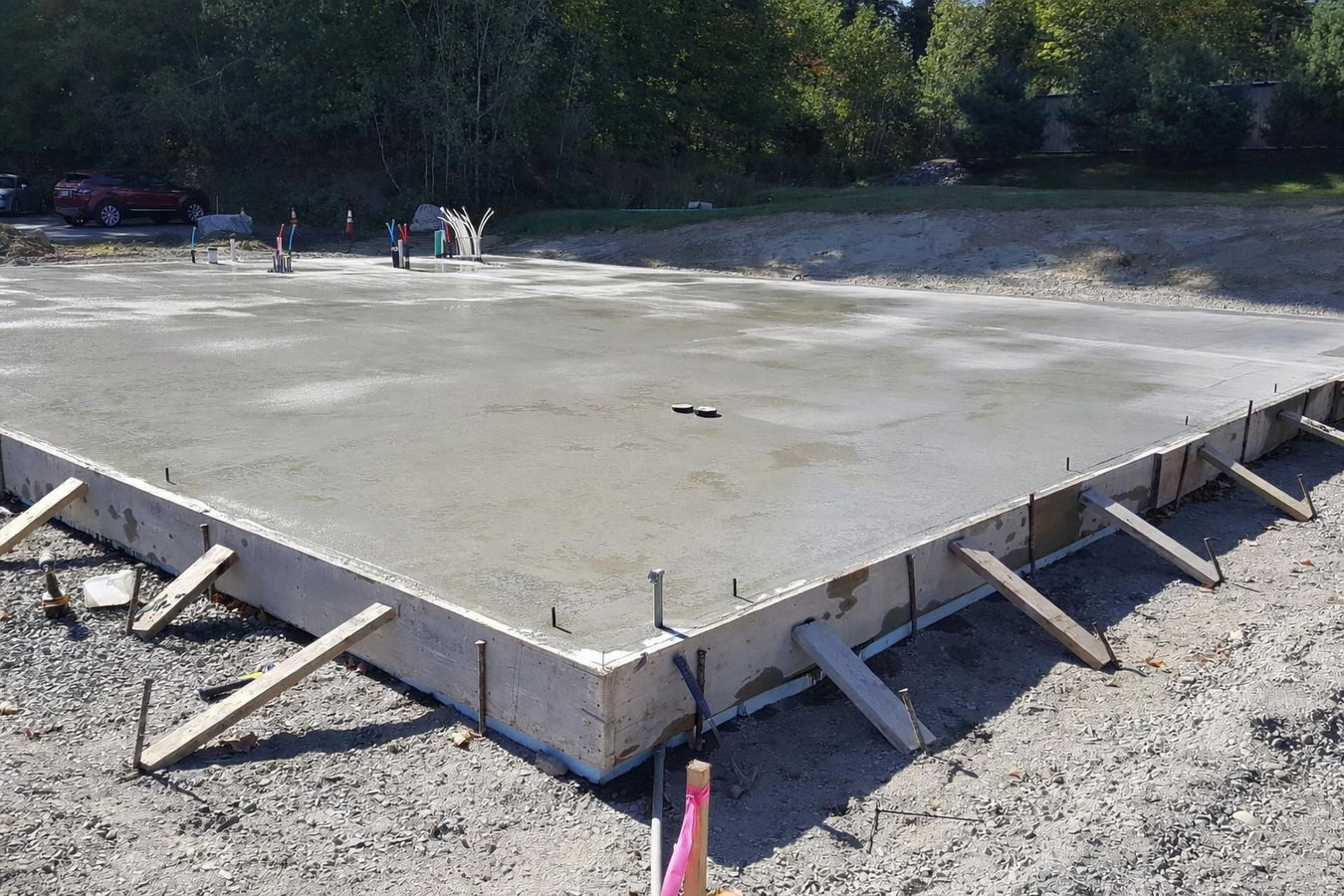
Slab foundation building in Morgan Hill means grading and compacting your site, laying a gravel base and moisture barrier, setting steel reinforcement and any in-slab plumbing, passing a city pre-pour inspection, and pouring a reinforced concrete slab engineered for local soil and seismic conditions - most residential slabs take three to seven days of active work, with full permit compliance from start to finish.
Morgan Hill homeowners need a slab for new home construction, accessory dwelling units, garage conversions, or large additions. The soil here - especially near the eastern foothills - contains significant clay that expands when wet and shrinks when dry. A foundation that ignores that will show cracks within a few years. If your project also involves below-grade structural support at the perimeter, our concrete footings work ties directly into the slab design to give your walls a stable anchor point.
The Calaveras Fault runs through the Morgan Hill area, and California requires foundations in this seismic zone to be reviewed by a licensed engineer and built to a higher reinforcement standard than in lower-risk parts of the country. That extra rigor adds some time and cost, but it also means your home has a structural base specifically designed for where it sits.
The most straightforward reason for a new slab is building something new from the ground up - a home, an accessory dwelling unit, a garage, or a significant addition. Without a properly engineered slab, there is nothing solid for the walls and roof to rest on. If you are at the planning stage for any new construction in Morgan Hill, a slab foundation is almost certainly part of the project.
Small hairline cracks in an existing slab are usually harmless. But cracks wider than a quarter inch, cracks that run diagonally from door or window corners, or sections of floor that feel noticeably higher or lower than adjacent areas are signs the slab is moving. In Morgan Hill, this kind of movement is often tied to clay soils reacting to seasonal moisture - and it is worth having a professional assess whether repair or replacement is the right call.
When a slab shifts, the walls above it shift too. One of the first things homeowners notice is interior doors sticking or gaps appearing at the tops of door frames - the frame is no longer square. In Morgan Hill's older neighborhoods near downtown, homes built in the 1960s and 1970s on original slab foundations may be showing this kind of movement as underlying soils have settled over decades.
Standing water along your foundation edge after rain, or a musty odor inside the home, may mean the drainage around your slab is no longer working correctly. Morgan Hill's wet winters can push significant water toward foundations that were not graded properly or whose drainage has been altered by landscaping changes over the years. Persistent moisture under or around a slab leads to much more expensive problems if left unaddressed.
We handle slab foundation projects from permit application through final inspection: site grading, soil compaction, gravel base and moisture barrier installation, steel reinforcement placement, in-slab utility rough-ins, the concrete pour, and finishing. For homeowners building accessory dwelling units or additions, we coordinate with your architect or engineer to make sure the foundation design matches your structure and satisfies the city. When the project calls for deeper structural support at load-bearing points, our concrete footings service integrates directly with the slab so the entire foundation works as one connected system.
For homeowners whose project scope extends to a full new build or a significant renovation that also requires a general foundation system, our foundation installation service covers the broader range of foundation types - including raised perimeter foundations for older-style construction - so you have the right base for whatever you are building.
Best for new home construction and large additions where the full footprint needs a properly engineered concrete base from grade up.
Suited for accessory dwelling units on existing Morgan Hill lots - smaller footprints with the same permit, engineering, and seismic requirements as a full home.
For detached garages or outbuildings being converted to habitable space - typically involves upgrading an existing pad to current structural and insulation standards.
For room additions connecting to an existing home - the new slab needs to match the height of the existing floor and be properly tied to the original structure.
Two conditions make slab foundations in Morgan Hill more demanding than in many other California cities. First, much of the city sits on clay-heavy soil that swells during the wet season and shrinks back in summer. A foundation designed without accounting for that movement - using undersized footings or skipping soil treatment - will develop cracks as the ground cycles through wet and dry years. Second, the Calaveras Fault runs directly through the Morgan Hill area. The city experienced a significant earthquake in 1984, and California building requirements for this seismic zone call for more steel reinforcement and specific footing designs compared to lower-risk parts of the state. Both of these factors are reflected in how your slab is engineered, what the inspector checks before the pour, and how the permit process works in Santa Clara County.
Morgan Hill has been one of the faster-growing cities in the South Bay, with significant new residential development in areas like the east side of town and neighborhoods near Cochrane Road. Contractors serving Gilroy and San Martin face the same clay soil and seismic conditions, and we bring that regional understanding to every slab project we take on in the area.
We reply within one business day. Tell us the structure type, the address, and whether you have plans or a soils report. Most lots in Morgan Hill vary enough that we schedule a site visit before giving you a firm price - a phone estimate here is rarely reliable.
We submit your plans to the City of Morgan Hill Building Division and handle every step of the permit process. In this area, plan review can take a few weeks - we keep you updated at each milestone so there are no surprises. Engineering review is standard for seismic zones in Santa Clara County.
Once permits are approved, the crew grades your lot, compacts the soil, and lays the gravel base and moisture barrier. Steel reinforcement and any in-slab utilities go in next. Before any concrete is poured, a city building inspector visits and verifies the work matches the approved plans.
The concrete is poured and finished, then cured under controlled conditions - slower curing produces a stronger slab. About a week after the pour, framing can begin. Final inspection from the city closes out your permit. We walk you through the completed slab and give you any care instructions before we leave.
We handle permits, engineering coordination, and city inspections - you get a written estimate and a realistic timeline before anything is signed.
(669) 286-1363The clay-heavy ground in many parts of Morgan Hill moves with the seasons. We assess your specific lot conditions before designing the foundation - not after. That means the right footing depth, the right reinforcement, and the right drainage plan for your property from day one.
Navigating the City of Morgan Hill building permit process is part of what you hire us for. We submit the application, coordinate the plan review, schedule every required inspection, and give you the final signed permit record to keep with your home's documents. Your project is fully legal and documented.
Every slab we build in Morgan Hill is designed with seismic forces in mind and reviewed by a licensed engineer. California requirements for this fault zone are more demanding than in lower-risk areas, and we build to that standard on every project. For background on regional seismic risk, the U.S. Geological Survey maintains current information on fault zones throughout California.
Pouring a slab on a rain-soaked site creates problems that show up years later. We plan your project timeline with Morgan Hill wet winters in mind and communicate immediately if conditions change - rather than pushing forward and hoping for the best. A finished foundation poured under the right conditions is worth the wait.
Every slab we pour in Morgan Hill reflects the same approach: assess the site honestly, engineer for local conditions, pull every required permit, and finish the job with documentation you can rely on. That is how a foundation should be built, and it is what you should expect from any contractor you hire here.
For general guidance on concrete slab construction standards, the Portland Cement Association publishes practical homeowner resources. For California seismic requirements, the California Geological Survey maintains current information on fault zones and building requirements. License verification is available at the California Contractors State License Board.
Full foundation installation for new homes and structures - including raised perimeter foundations for older-style construction in Morgan Hill.
Learn MoreReinforced concrete footings that anchor your foundation walls and load-bearing points to stable ground below the seasonal clay movement.
Learn MorePermit timelines in Santa Clara County add weeks to any project - the sooner you call, the sooner we can lock in your start date before the summer construction window fills up.