Serving Morgan Hill, CA and surrounding areas. (669) 286-1363
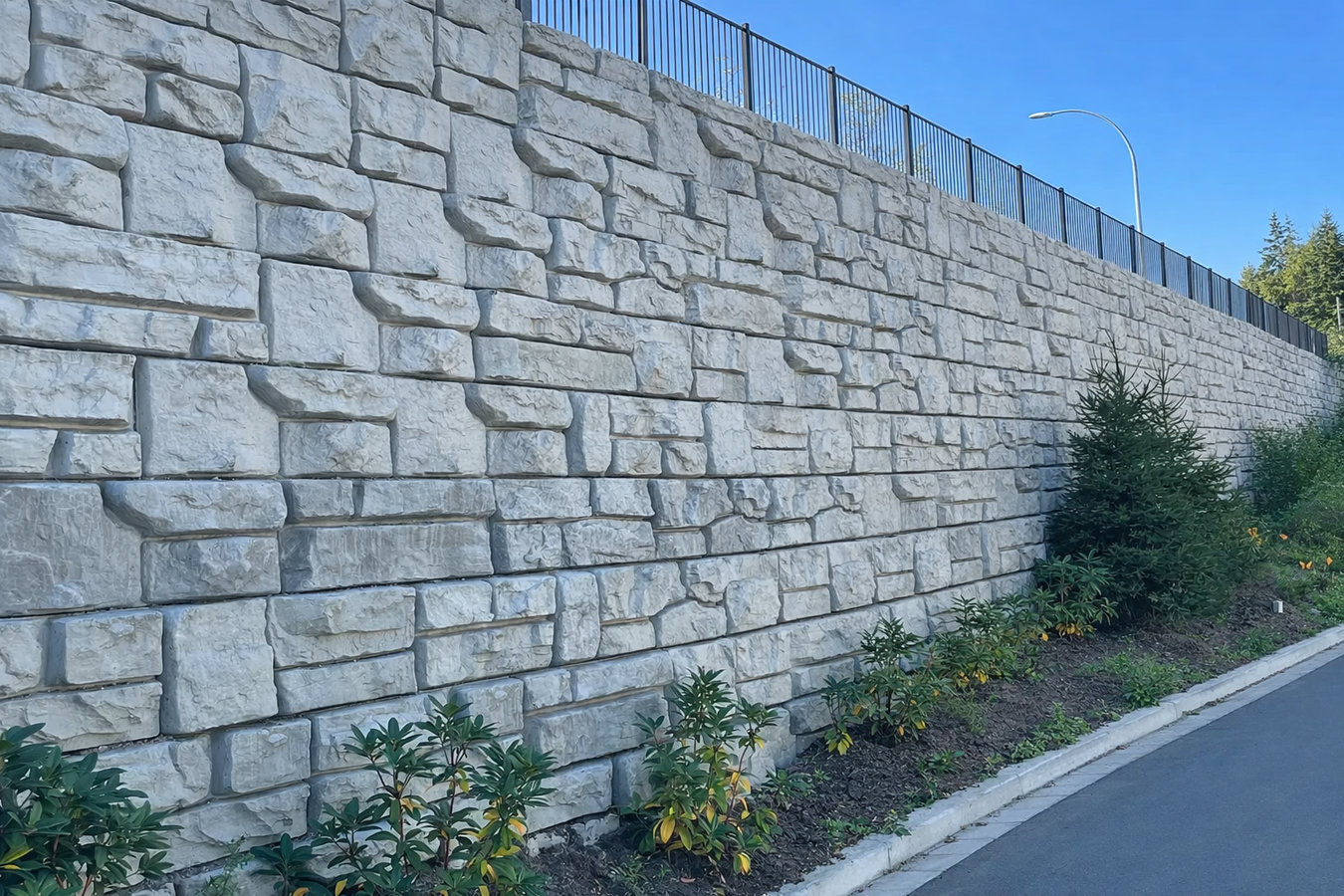
Slopes washing away, an old wall leaning, or a hillside you cannot use? We build concrete retaining walls in Morgan Hill that hold back soil, drain properly, and pass city inspection.
Concrete retaining walls in Morgan Hill hold back soil on sloped or uneven properties, preventing erosion and creating usable flat space - most residential projects take three to seven days from excavation to final inspection, depending on height, length, and site conditions.
If you have a slope that washes out every winter, an old wall that is starting to lean, or a hillside you have never been able to use, a properly built retaining wall changes all of that. Morgan Hill's clay-heavy soils and wet winters put more pressure on walls than most homeowners expect - which is exactly why drainage behind the wall is as important as the wall itself. Without it, water builds up and pushes the wall forward over time.
Many retaining wall projects pair naturally with concrete floor installation when homeowners are creating a new flat outdoor living area behind the wall.
If you see soil, mulch, or gravel collecting at the base of a slope after a rainstorm, erosion is already underway. Morgan Hill's wet winters can strip a hillside faster than most homeowners expect, especially on the clay-heavy soils common throughout the valley floor. Left alone, erosion can damage landscaping, hardscape, and eventually threaten structures near the slope.
A retaining wall that tilts forward or has horizontal cracks running across it is under pressure it was not designed to handle. This is common in older Morgan Hill neighborhoods where walls were built before current seismic and drainage standards. A leaning wall is not just a cosmetic problem - it can fail suddenly, especially after a heavy rain.
If part of your yard is too steep to mow, walk on comfortably, or use for anything practical, a retaining wall with a flat terrace behind it can fix that. Many Morgan Hill homeowners in foothill neighborhoods have turned unusable hillside into patios, garden beds, or safe areas for kids. The added usable square footage often makes the investment feel worthwhile on its own.
When a slope directs water toward your house instead of away from it, you may notice wet spots or damp areas near your foundation after winter storms. This is a sign that the grading on your property is not managing water correctly. A retaining wall with proper drainage can redirect that flow before it causes real foundation damage.
Every retaining wall project starts with excavating down to stable soil and compacting a proper gravel base - the step most homeowners never see but that determines whether the wall moves in three years or holds for fifty. We build both poured concrete and concrete block walls depending on what suits your site, and every wall includes gravel backfill and drainage pipe behind it so water has a path to escape instead of building pressure. We handle the City of Morgan Hill permit application and coordinate the inspector visit so you do not have to navigate city hall on your own.
For steep slopes, we often recommend terracing - building two or three shorter walls in steps rather than one tall wall. This approach is typically more stable, easier to permit, and can look more natural when landscaped. Homeowners creating new outdoor living areas behind the wall also frequently pair this work with concrete footings for pergolas, shade structures, or outdoor kitchens on the new flat terrace.
Best for homeowners who want maximum strength and a clean, monolithic finish on visible faces.
Best for projects where terraced steps or a textured face appearance suits the landscape better.
Best for steep slopes where a single tall wall would require extra engineering or be harder to permit.
Morgan Hill sits near the Calaveras Fault, one of the more active fault systems in the Bay Area. Retaining walls here need to be designed with lateral seismic forces in mind - not just the downhill weight of soil. Combined with the expansive clay soils throughout the Santa Clara Valley, which swell during wet winters and shrink in dry summers, these conditions demand more careful design than you would need in other parts of California. The city's permit and inspection process here is one practical way those design requirements get verified.
Hillside lots are common in Morgan Hill's foothill neighborhoods, and so are the erosion and drainage challenges that come with them. We regularly work on retaining wall projects across the South Bay, including in Gilroy and Campbell, and we bring the same soil-specific approach to every project in the region.
We visit your property to look at the slope, soil, drainage, and available workspace before giving you a written quote. We respond within 1 business day of your inquiry, and there is no pressure to commit after the visit.
If your wall needs a city permit - which it likely does if it is over four feet tall - we handle the application and plan submission for you. We schedule the project start once the permit clears; no work begins without it.
The crew digs to stable soil, compacts the gravel base, and builds the wall in courses. Drainage material and perforated pipe go in behind the wall as it goes up - not as an afterthought. Most residential walls reach full height within one to two days of active construction.
Concrete cures for about a week before the area behind the wall is backfilled. A city inspector signs off on permitted work before backfill goes in. Once the inspection passes and the area is graded, the project is done and the space is ready for whatever you planned.
We respond within 1 business day. Getting a quote means we come look at your property and give you a written number - no obligation, no pressure. Call or fill out the form below and someone from our office will follow up to schedule your site visit.
(669) 286-1363We install gravel backfill and perforated drain pipe behind every wall we build - not as an add-on, but as a standard part of the job. In Morgan Hill's wet-dry climate, a wall without proper drainage behind it will show signs of pressure and movement within just a few rainy seasons.
Morgan Hill sits near the Calaveras Fault, and the city's permit review includes checking that retaining wall designs account for lateral seismic forces. We build to those standards, and the inspection record means you have documentation that the work was done correctly - which matters when you sell your home.
USGS Earthquake Hazards ProgramWe apply for the required City of Morgan Hill building permit, submit the plans, and coordinate the inspector visit - you do not have to navigate the process yourself. An unpermitted wall can become a real problem during home sale escrow, so having the permit on record is genuine protection for your investment.
The Santa Clara Valley's expansive clay soil swells when wet and shrinks when dry - a cycle that puts extra pressure on retaining walls every year. We account for this with deeper footings and more robust base preparation than you would find on projects in more stable soil conditions elsewhere.
Every retaining wall we build is designed for the specific conditions on your property - the soil type, the slope angle, the drainage patterns, and the seismic environment. That preparation is what separates a wall that holds for decades from one that needs attention within a few rainy seasons.
Pour a new concrete floor for your garage, patio, or covered outdoor area after your retaining wall creates flat usable space.
Learn MoreAdd permanent footings for a pergola, shade structure, or fence posts on the newly leveled terrace behind your wall.
Learn MoreSpring and early fall fill fast - reach out now to lock in your project date before the next rainy season arrives.