Serving Morgan Hill, CA and surrounding areas. (669) 286-1363
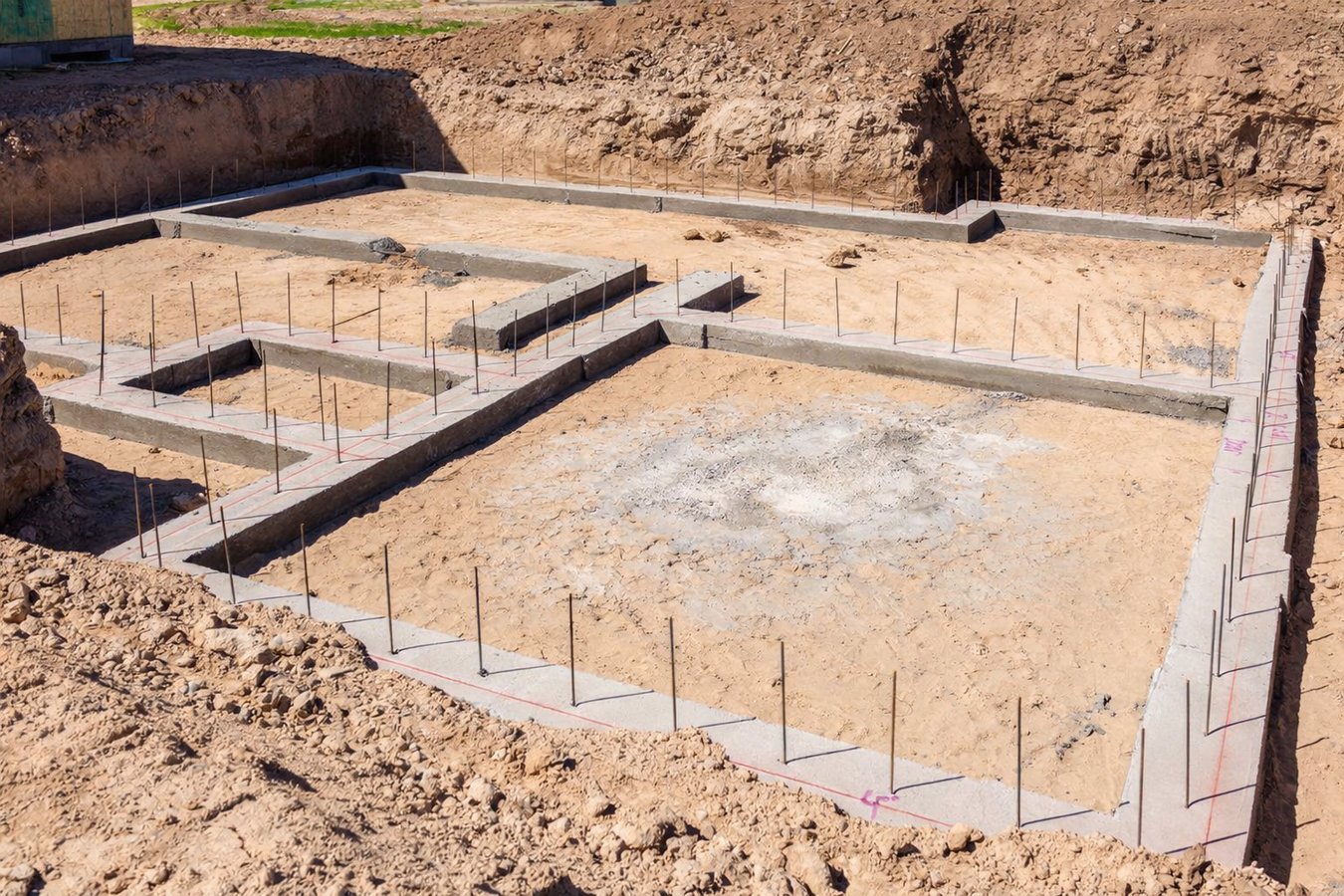
Your new home, ADU, or addition needs a foundation built for Morgan Hill clay soils and seismic conditions - not a one-size-fits-all pour that ignores what this area demands.
Your new home, ADU, or addition needs a foundation built for Morgan Hill clay soils and seismic conditions - not a one-size-fits-all pour that ignores what this area demands.
Foundation installation in Morgan Hill means excavating and preparing your site, compacting the soil, installing forms and steel reinforcement, coordinating utility rough-ins, passing a city pre-pour inspection, and pouring the concrete - most residential foundation projects take one to two weeks of on-site work, with the full timeline from first call to final inspection running four to six weeks once permit review and curing time are factored in.
Morgan Hill homeowners typically need a new foundation for a new home, an accessory dwelling unit, a garage or workshop, or a significant room addition. The most common foundation type in newer construction here is a slab-on-grade - a single reinforced concrete layer that serves as both the structural base and the floor. For older-style construction or properties with significant grade changes, a raised perimeter foundation may be the better fit. If your project is a new slab, our slab foundation building page goes into greater detail on that specific process.
Morgan Hill sits near the Calaveras Fault, and California requires foundations in this seismic zone to include more steel reinforcement and specific design features than in lower-risk areas. That is built into the permit process here - which means if your contractor pulls the permit and passes inspection, you can be confident those requirements were met.
If doors or windows that used to open smoothly now stick, drag, or leave visible gaps at the corners, the frame around them may be shifting. This is one of the earliest signs that the foundation is moving. In Morgan Hill, where clay soils expand and contract with the seasons, this kind of movement is worth taking seriously rather than writing off as a minor annoyance.
Small hairline cracks in drywall are normal in any home. But diagonal cracks running at roughly 45 degrees from the corners of door frames or windows often indicate that one part of the foundation is settling faster than another. This is a condition that gets worse over time, and it is one of the patterns that tells a contractor your foundation needs evaluation - not just a fresh coat of paint.
After Morgan Hill's rainy season, walk around your home and look at the foundation wall or slab edge. Cracks wider than a credit card, cracks that are wider at one end, or cracks where one side sits higher than the other are signs the foundation has moved in a way that warrants a professional assessment - especially given the clay soils common throughout this area.
If you are adding an ADU, a garage, a room addition, or any other new structure, a new foundation is required before framing can begin. Morgan Hill has seen significant ADU construction in recent years, and the city permit process requires foundation plans to be submitted and approved before any ground is broken. Starting the permit process early avoids the most common schedule delays.
We handle foundation installation projects end to end: permit application, site excavation and grading, soil compaction, forming, steel reinforcement placement, utility coordination, the pour itself, finishing, curing, and final city inspection. For homeowners building standard ADUs, garages, or additions, a slab foundation is the most straightforward choice. Our slab foundation building service covers that work in detail. For properties with significant slope, older-style raised construction, or structures requiring access to utilities running beneath the floor, a raised perimeter foundation with a crawl space may be the better option - and we can walk you through which makes sense for your specific lot.
When your project involves a large structure like a new home or a commercial-adjacent property, a properly designed foundation often requires reinforced concrete footings at load-bearing points before the slab or perimeter walls go in. Our concrete parking lot building experience with large-footprint pours also informs how we manage sequencing and quality control on bigger residential foundation projects.
Best for new homes, ADUs, and additions on relatively flat lots - a single reinforced concrete layer poured directly on prepared ground.
Suited for older-style construction, sloped lots, or structures where utility access under the floor is required - walls sit on a concrete stem wall above grade.
Designed for accessory dwelling units on existing Morgan Hill properties - smaller footprints with the same permit, engineering, and seismic requirements as a full home.
For detached garages or room additions connecting to an existing home - the new foundation needs to match existing floor heights and tie properly to the original structure.
Two conditions define foundation work in Morgan Hill. First, the clay-heavy soil throughout much of the Santa Clara Valley swells when it absorbs water during winter rains and shrinks back during dry summers. That movement is relentless - and a foundation built without accounting for it will show cracks as the ground cycles through wet and dry seasons year after year. Proper soil compaction, gravel base preparation, and drainage design are not optional steps here. Second, Morgan Hill sits in a seismically active area near the Calaveras Fault. The 1984 Morgan Hill earthquake caused significant structural damage in the area, and California building requirements for this zone call for more steel reinforcement and specific anchor designs than in lower-risk parts of the country. Every foundation we install here reflects both of those realities.
The broader South Bay area faces the same combination of conditions - contractors serving Hollister and Gilroy deal with similar clay soils and seismic requirements, and the experience of working throughout this corridor directly informs how we approach site preparation and foundation design on every project we take on in Morgan Hill.
We reply within one business day. Tell us the structure type and address - whether it is a new home, ADU, addition, or garage. Most contractors in this area schedule a site visit before quoting because lot conditions in Morgan Hill vary enough that a phone estimate is rarely accurate. The visit costs you nothing.
After the site visit, we give you a written estimate that breaks out labor, materials, permit fees, and any site-specific prep your lot requires. Once you approve it, we submit the permit application to the City of Morgan Hill Building Division. Plan review typically adds one to three weeks before work begins - we handle all of it and keep you updated.
With permits approved, the crew marks underground utility lines through the state 811 service before any digging starts - this is required by California law. They then excavate, grade, and compact the soil, install forms, and place steel reinforcement. This preparation stage is where the quality of the foundation is really determined.
The concrete is poured, finished, and cured. A city inspector visits to verify the work matches the approved plans - your contractor coordinates that inspection. Once it passes, the permit is closed and you receive the signed inspection record. That document is worth keeping with your home's papers permanently.
We handle permits, engineering coordination, and city inspections. You get a written, itemized estimate and a realistic schedule before anything is signed.
(669) 286-1363Clay soil throughout Morgan Hill is one of the most common causes of cracked foundations in this area - but only when the soil is not properly prepared before the pour. We compact the soil, install the correct gravel base, and verify drainage is directing water away from your foundation before a single yard of concrete is placed. Getting this right now prevents expensive problems later.
Unpermitted foundation work is one of the most common deal-breakers when Morgan Hill homeowners try to sell or refinance. We handle every step of the permit process from application to final sign-off, and we give you the closed permit record to keep with your home's documents. You will never have to explain to a buyer's inspector why the foundation lacks a permit.
Living near the Calaveras Fault means seismic forces are a real consideration, not a remote one. We build every foundation to meet California requirements for this seismic zone, and the city inspector confirms that before the pour is covered. For more on what seismic design means for your foundation, the California Geological Survey publishes accessible information on fault zones and building requirements.
One of the most common frustrations with construction projects is a final bill that looks nothing like the original estimate. We provide a written proposal that breaks out every line item - including permit fees, grading, and any soil-specific work your lot requires - before you sign anything. No surprises, and the confidence to make a clear decision.
Foundation installation in Morgan Hill is not a project where cutting corners pays off. The combination of expansive clay soil and seismic proximity means every step of the process - from soil prep to the final inspection - matters for how your home performs over the next 50 years. That is the standard we hold ourselves to on every project we take on here.
For homeowner-facing guidance on foundation construction, the National Association of Home Builders publishes useful resources on what to expect during new home construction. For California-specific licensing verification, use the California Contractors State License Board lookup tool before hiring any contractor.
Large-footprint concrete pours for commercial and residential parking - built to handle vehicle loads and the clay soil conditions common throughout Morgan Hill.
Learn MoreFocused slab-on-grade foundation work for new homes, ADUs, and additions - with full permit handling and engineering review for Santa Clara County seismic requirements.
Learn MoreOur crew is booking projects now - call today to lock in your start date and get a written estimate before the summer construction season fills up.